7 min read
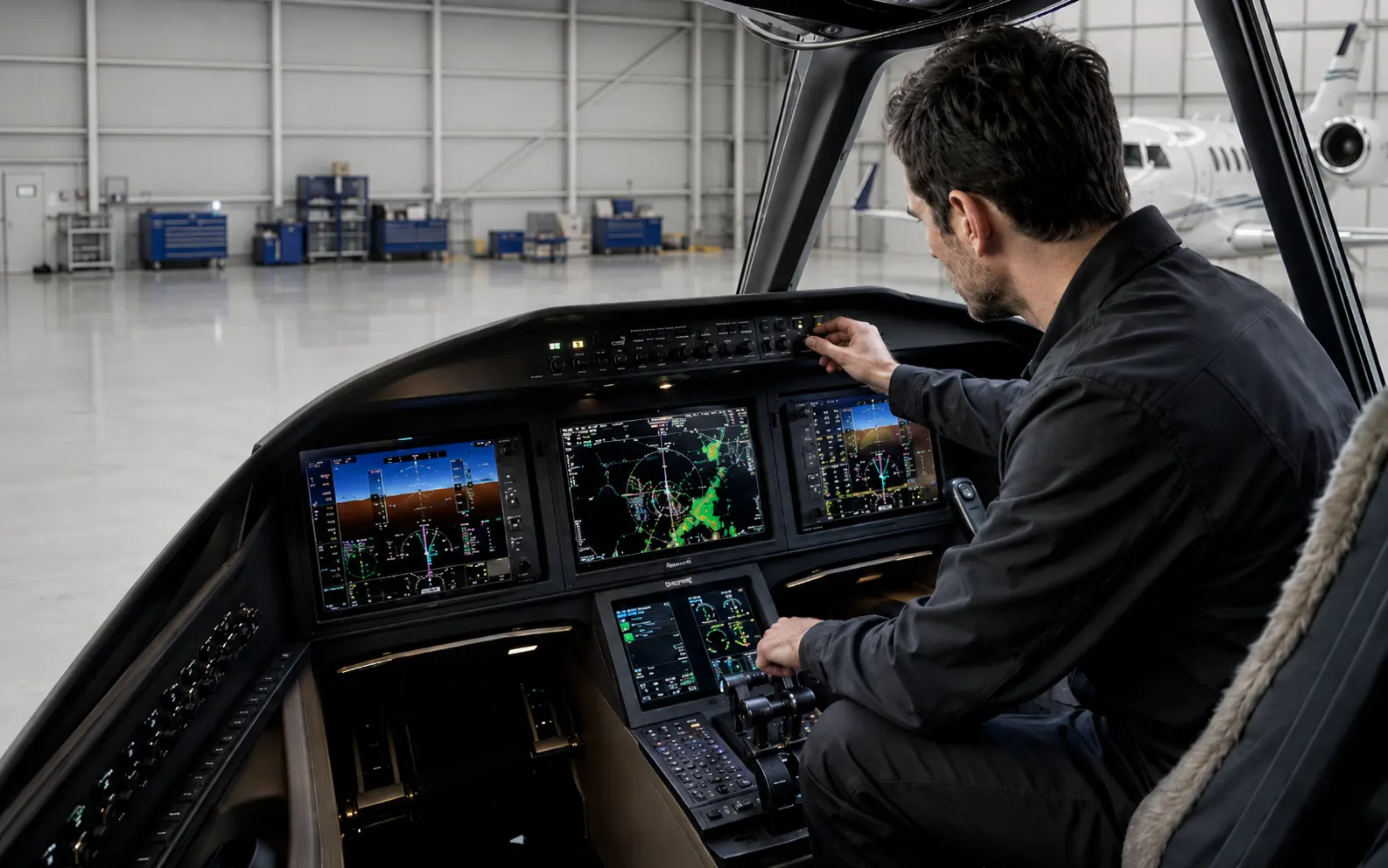
Glass cockpit upgrades get sold on the photograph: a panel of clean, bright displays replacing a wall of mechanical instruments. It is a genuinely dramatic before-and-after, and it is the least useful basis for the decision.
The case for an upgrade is almost always economic and operational rather than aesthetic. Here is how to think about it.
Start with what the current panel costs you
Mechanical instruments are repairable and often worth repairing. But an ageing panel has a running cost that tends to be invisible because it arrives in pieces: a gyro overhaul here, an indicator repair there, an unscheduled removal that grounds the aircraft for a week because the replacement had to be sourced.
Add up two or three years of that, including the downtime rather than just the invoices, and you have the number that actually belongs on one side of the comparison. Operators are frequently surprised by it.
Then look at supportability, not age
Age on its own is not a reason to replace anything. Supportability is. The question is whether the equipment in your panel can still be repaired, and whether it will still be repairable in five years.
Some older equipment will be. Plenty of mechanical instrumentation is straightforward to keep serviceable indefinitely by a shop that works at component level. Other equipment — particularly early digital units — is genuinely heading for a wall, because the parts inside it are no longer manufactured by anyone. That is the equipment worth planning around.
Understand what you are actually buying
The displays are the visible fraction of the job. Most of the cost and nearly all of the risk sit behind the panel:
- Integration with the systems that stay on the aircraft — navigation, communication, surveillance, autopilot. New equipment has to talk to what remains.
- Wiring. Harnesses have to be built, routed and labelled correctly. This is the part nobody sees and the part that causes faults later.
- Removal of what is coming out, including the structural and cosmetic work of the panel itself.
- Testing and verification of the whole installation, and the documentation that goes with it.
The cases where it clearly pays
- You intend to keep the aircraft for five years or more, so the investment has time to return.
- Your current panel is already generating unscheduled maintenance and unplanned downtime.
- Equipment in the panel is at or near the end of its supportability.
- You are operating in an environment where the capability difference is operationally real, not just pleasant.
- You are doing other panel work anyway — combining it saves a second round of removal and downtime.
The cases where it does not
- You expect to sell within a couple of years. You will rarely recover the cost in the sale price.
- Your existing instrumentation is fully supportable and not causing you trouble.
- The budget only covers the displays, with nothing left for doing the integration and wiring properly.
- One failed unit prompted the conversation. Repair the unit, then decide about the panel separately and without time pressure.
A middle path that gets overlooked
An upgrade is not binary. It is entirely reasonable to replace the equipment that is becoming unsupportable, keep what still works, and phase the rest across scheduled downtime over several years. That spreads the cost, keeps the aircraft flying, and avoids committing to a full conversion before you need to.
It is also the option a shop is least likely to lead with, because it is the smallest sale. Worth asking about specifically.
Related Capability
Aircraft Installations & UpgradesSingle equipment changes through complete glass-cockpit conversions.