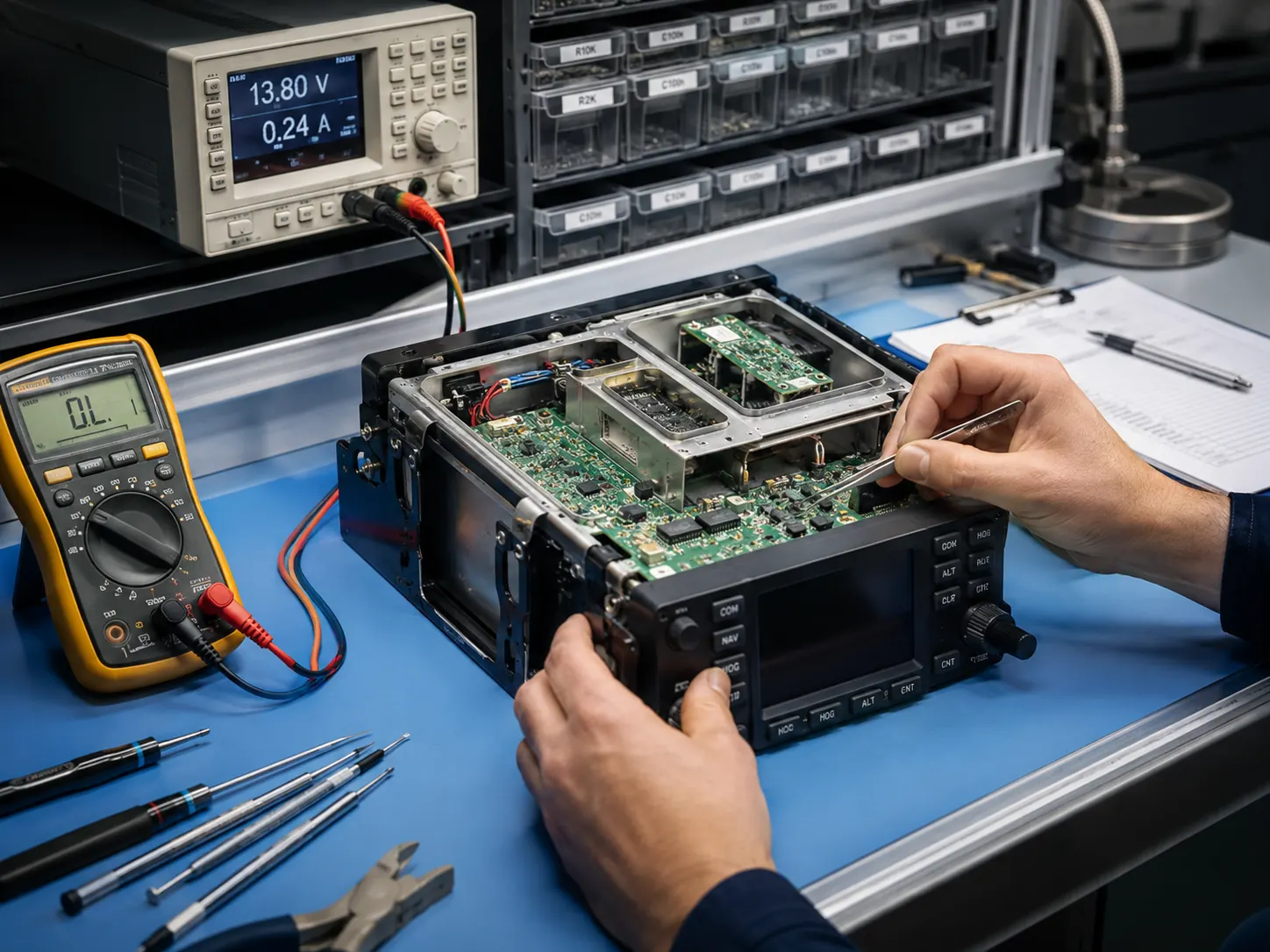
8 min read
No fault found is the most expensive result in avionics maintenance. Nothing was repaired, the aircraft lost several days, an invoice was still generated, and the fault is exactly where it was. Do it twice on the same aircraft and the cost exceeds most actual repairs.
It is also, in the great majority of cases, avoidable. No fault found is rarely a mystery — it is a predictable outcome of one of four situations, and each of them has a different fix.
What “no fault found” actually means
It means the unit met its specification under the conditions it was tested. That is a much narrower statement than “the unit is fine”, and the gap between those two readings is where the whole problem lives.
The four causes, in order of how often they occur
| Cause | Tell-tale | Where the fault actually is |
|---|---|---|
| Fault is not in the unit | Symptom changes when a connector is disturbed, or moves with airframe flexing | Wiring, connectors, bonding, or an interfacing unit |
| Condition-dependent fault | Only in the climb, only when cold, only after two hours | Inside the unit, but only under conditions the bench did not apply |
| Symptom was misdescribed | Shop tested the wrong function entirely | Somewhere the shop was never asked to look |
| Wrong unit removed | Two units produce identical indications | The other unit in the chain |
1. The fault is not in the unit
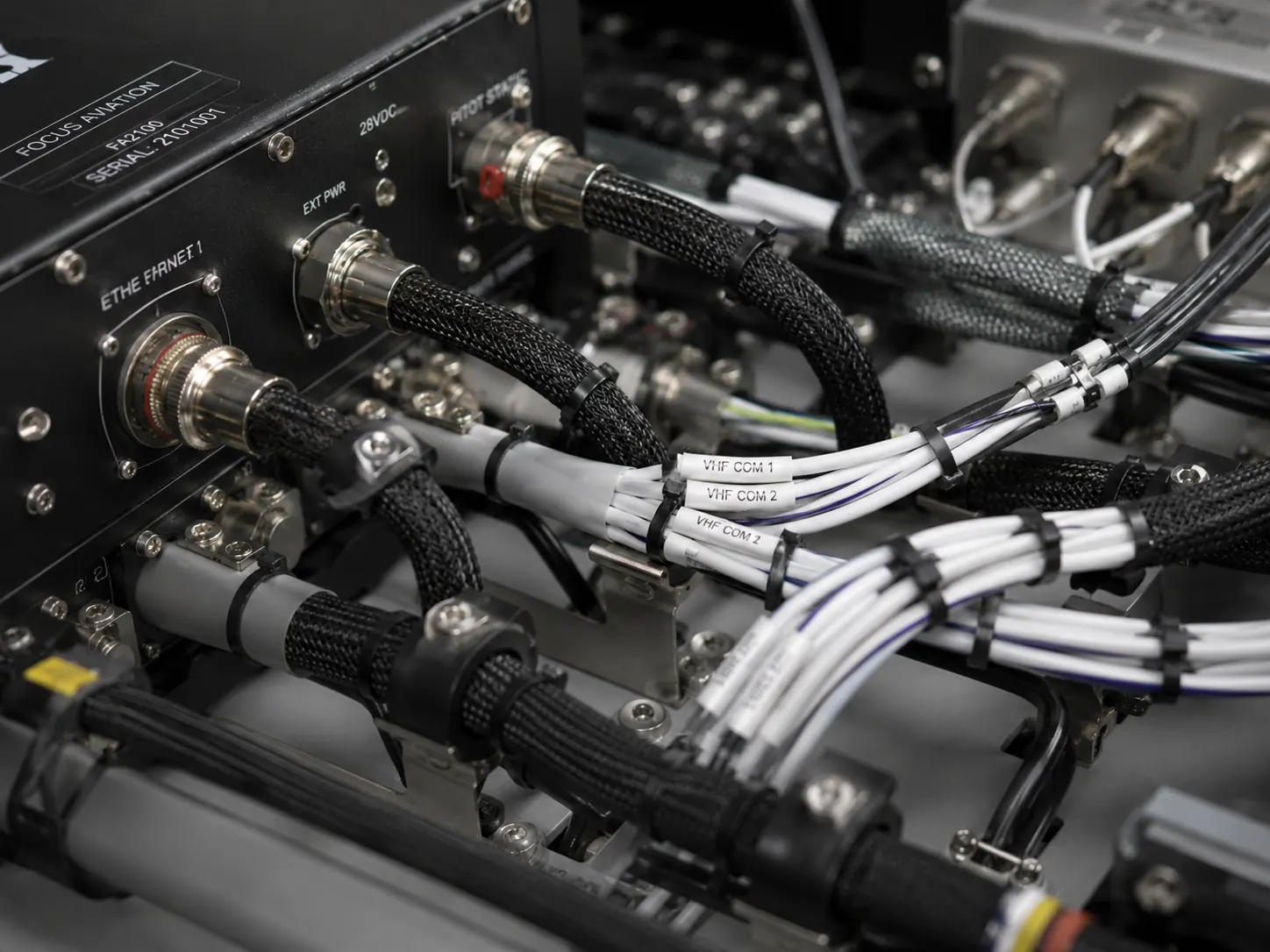
This is the single most common cause, and it is not close. Wiring, connectors, grounding and interfacing equipment account for a large share of faults attributed to avionics — because from the cockpit, a bad connector pin and a failed circuit board produce exactly the same indication.
The unit is the visible, removable, blameable component. The harness behind it is none of those things. So the unit comes off, and it tests serviceable, because it was serviceable all along.
Suspect this when the symptom changes if a connector is wiggled, when it moves with airframe flexing or landing loads, or when it appeared after unrelated work in the same bay. In that case the answer is harness repair and manufacturing, not another bench test.
2. The fault is real but condition-dependent
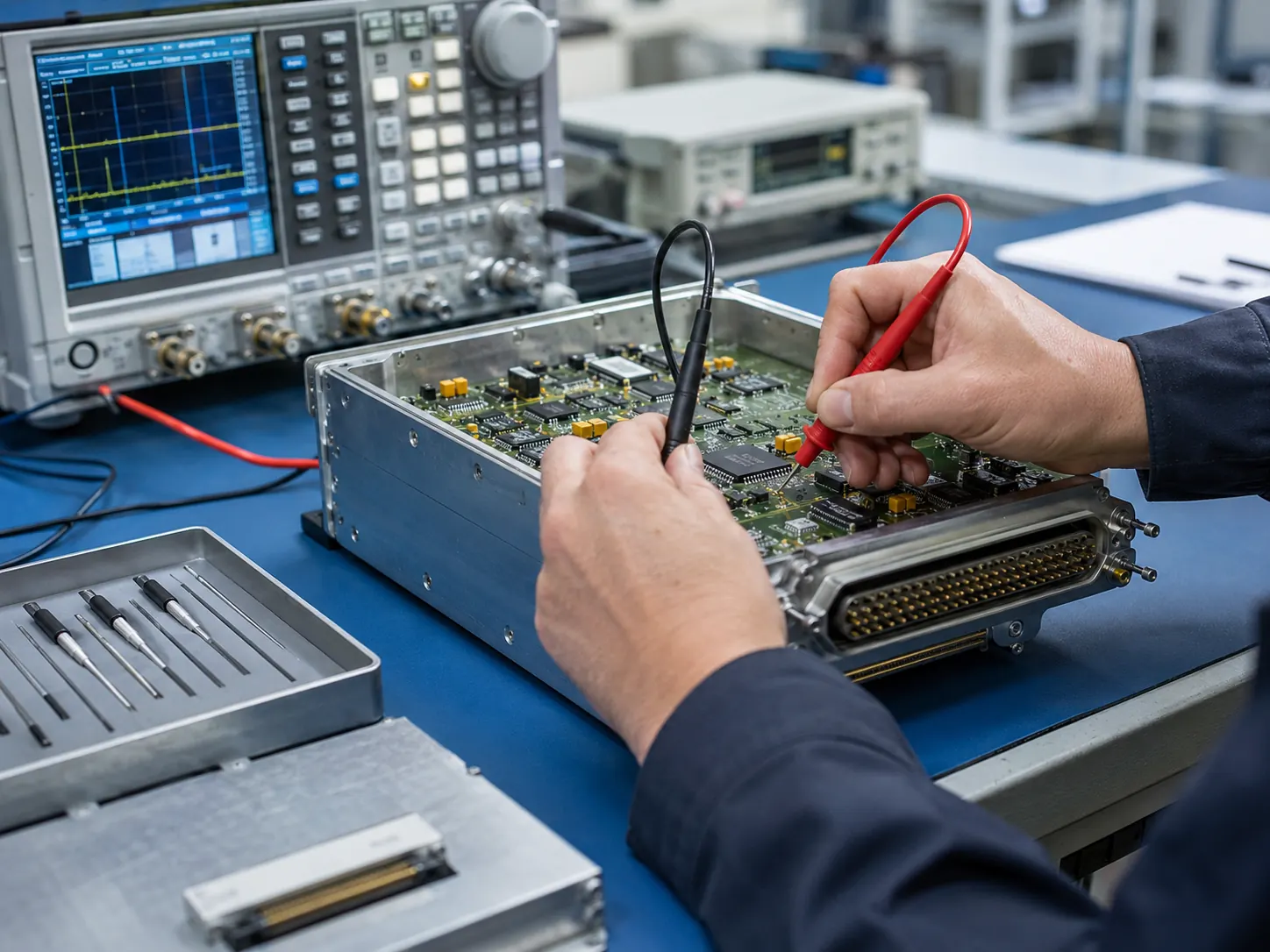
Some failures only exist under conditions a standard bench test does not create. A cracked solder joint conducts perfectly until thermal expansion opens it. A marginal component drifts out of tolerance only when cold-soaked. A power supply sags only under a load the bench never applies.
None of these are exotic. They are the normal ageing failure modes of electronics that spend their life being heated, cooled, shaken and power-cycled. What makes them hard is that a functional test at room temperature confirms the unit works — and that is a true result that tells you nothing.
Breaking this one requires testing under the conditions that trigger it: thermal cycling, vibration, supply variation, extended run time. That is more expensive than a functional check, which is precisely why it is often skipped — and why the unit comes back.
3. The symptom was misdescribed
A unit arrives with a tag reading “U/S” or “inop”. The shop runs a full functional test, everything passes, and it goes back. Nobody was ever told that the fault appeared once, in the descent, after ninety minutes, and only on one radio.
This is the cheapest cause to fix and the most commonly ignored. What you send with the unit changes what gets tested. A shop given a specific symptom tests for that symptom; a shop given “inop” runs the standard test and reports the standard result.
4. The wrong unit came off
Several units in a chain can produce identical cockpit indications. An altitude discrepancy can originate in the encoder, the altimeter, the static system or the transponder. A navigation flag can come from the receiver, the antenna, the wiring or the indicator.
If the fault was not isolated on the aircraft before removal, the unit sent away is the most likely suspect rather than the confirmed one — and “most likely” is wrong often enough to matter. Isolating the fault on the aircraft first is what prevents this, and it is faster than it looks even when it feels slower on day one.
What to send with the unit
The difference between a useful repair and a no fault found is very often the paperwork that travels with the box. Include:
- What was observed, in the words of whoever observed it — not a diagnosis.
- The conditions: phase of flight, altitude, outside air temperature, how long into the flight, whether it self-recovered.
- Frequency. Once ever, once a week, or every flight are three different investigations.
- What has already been swapped, tested or ruled out, and what changed as a result.
- Whether the fault survived a power cycle, and whether it moves when connectors are disturbed.
- Any recent work in the same area, including unrelated work.
What to ask the shop before it goes
- What conditions will you test under, beyond a functional check at room temperature?
- If it tests serviceable, what happens next — and what will I be charged?
- Will you test for the specific symptom I have described, or run a standard test?
- Can you look at the installation as well as the unit, if the unit passes?
- What would make you tell me the fault is not in this unit?
The last question is the useful one. A shop that has a clear answer has thought about the possibility that your unit is innocent — which is the mindset that prevents a second no fault found.
When it happens twice
Stop sending the unit. A second no fault found on the same symptom is strong evidence the fault is not in the box, and a third is conclusive. At that point the money is better spent on isolating the fault on the aircraft — harness continuity under load, connector condition, bonding, and the units either side in the chain.
It is worth saying that the shop is not necessarily doing anything wrong in this scenario. A unit that meets specification meets specification. But a facility that only ever answers the narrow question — does this box pass — will keep returning the same true and useless answer, and that is where component-level diagnosis earns its keep.
Common questions
- What does no fault found mean on an avionics repair report?
- It means the unit met its specification under the conditions it was tested — usually a functional check at room temperature, on bench power, without vibration. It does not mean the unit is definitely serviceable in the aircraft, and it does not mean your fault is imaginary.
- Why does my avionics unit keep testing serviceable?
- Most often because the fault is not in the unit — wiring, connectors, bonding and interfacing equipment produce identical cockpit indications. The next most common reason is a condition-dependent fault that only appears with temperature, vibration or extended run time, none of which a standard bench test applies.
- Do I still get charged for a no fault found?
- Usually yes, because the testing was performed. Ask before the unit ships what the evaluation charge is and what happens to it if nothing is found — the answer varies considerably between facilities and is worth knowing in advance.
- How do I stop paying for repeat no fault founds?
- Send a specific symptom rather than a tag reading inop, ask what conditions the unit will be tested under, and isolate the fault on the aircraft before removing anything. After a second no fault found on the same symptom, stop sending the unit and investigate the installation.
- Can an intermittent fault be reproduced on a bench?
- Frequently, if the conditions that trigger it are applied deliberately — thermal cycling, vibration, supply variation and extended run time. It costs more than a functional check, which is why it is often skipped, and why the unit comes back.
Related Capability
Instrument & Avionics RepairComponent-level troubleshooting and repair across analog instruments, gyros and modern avionics.